
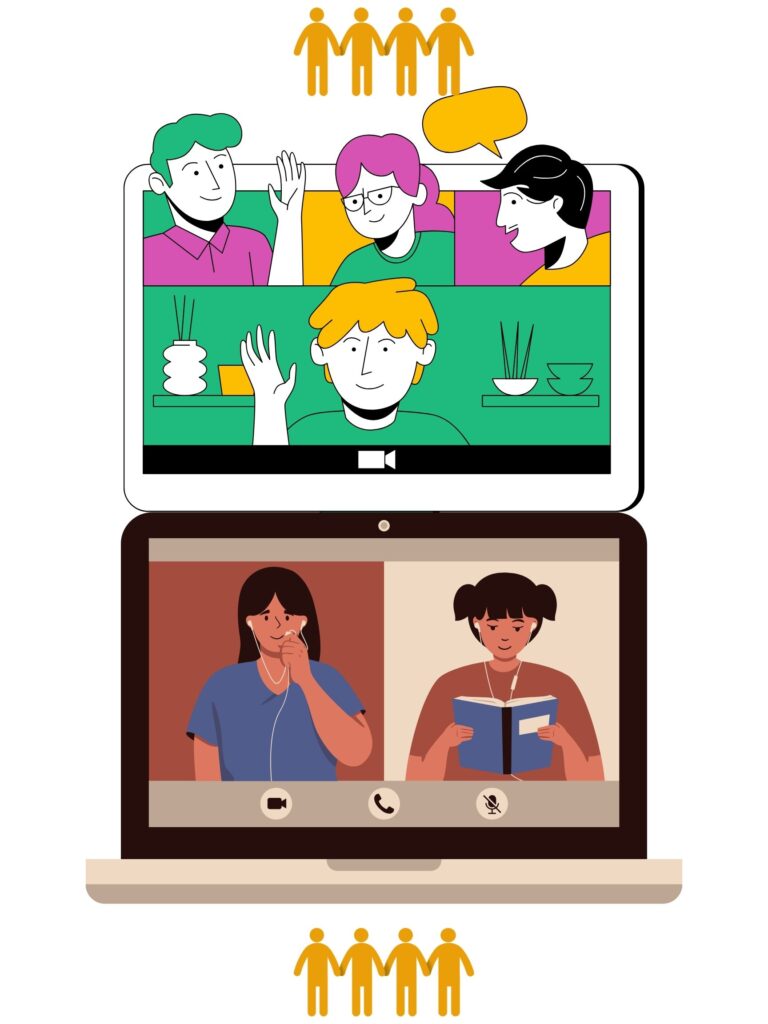
Image made by me, on Canva, November, 29
I found this article I wanted to unpack because it talks about what it actually means to be apart of an online learning community. The researchers looked at 309 psychology undergrads enrolled at the University of Leeds. These students were pushed into emergency remote learning during COVID. The researchers asked them to write a hundred words on what “learning community” meant, give an example of when they had felt part of one, and what would improve that feeling. They used reflexive thematic analysis to let student’s own words lead the way. Thematic analysis is a way of analyzing qualitative data like interview transcripts, open-ended survey answers, or written reflections, by looking for patterns or themes across the answers. The analysis resulted in three key themes emerging:
- Feeling connected despite physical distance
- Feeling included and visible
- Feeling “together” through shared experience and mutual support
What really stands out is that community, from the students perspective, wasn’t about fancy platforms or perfectly structured courses, it was about relationships, access, and visibility. Students talked about how isolating online learning felt because it lacked the face to face connection. They also mentioned that it’s hard to feel apart of a community when you’ve never met your classmates. They mentioned being able to go to the library and see other students working, going to lectures and seeing other students in person, and meeting fellow psychology students. All of these were strengths of in person learning. Some even mentioned how during online lectures most students kept their cameras off and conversations were one-way which furthermore affected their sense of community. The only interaction was content delivery. They wrote about feeling more like part of a community when they had regular, human contact with both peers and staff which is an improvement that could be made. This improvement could be having small group spaces to compare notes, group chats to share struggles, cameras on during interactions, and informal virtual meet ups that replicate spontaneous conversations that normally happen on campus. This could happen on discussion boards or peer support channels and can help reduce the feeling of being isolated as an online learner. The article also stressed the importance of visibility and support from staff beyond just delivering content. This could be through personalized communication, quick responses to concerns, and being invited into spaces typically reserved for academics (like research seminars) helped students feel valued and included.
The researchers and authors argue that if were going to keep using “learning community” in policy tools and surveys in higher education, particularly in online models, we need clearer definitions that reflect how students themselves understand community. And they understand it as connection, inclusion, mutual learning, and the option to engage on their own terms. This was a reminder to me and maybe others who are in online learning communities or trying to make one, that they don’t just “happen” on zoom. They have to be intentionally built around our needs as humans which is connection.
